

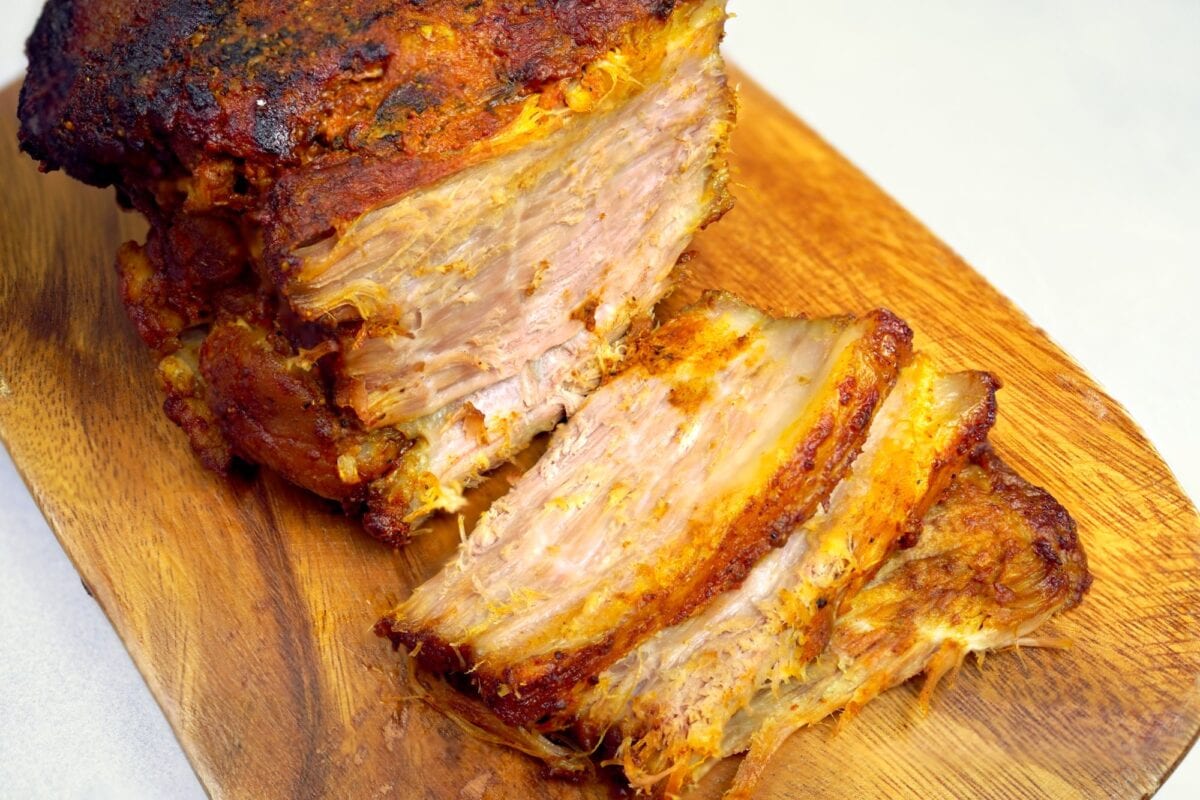
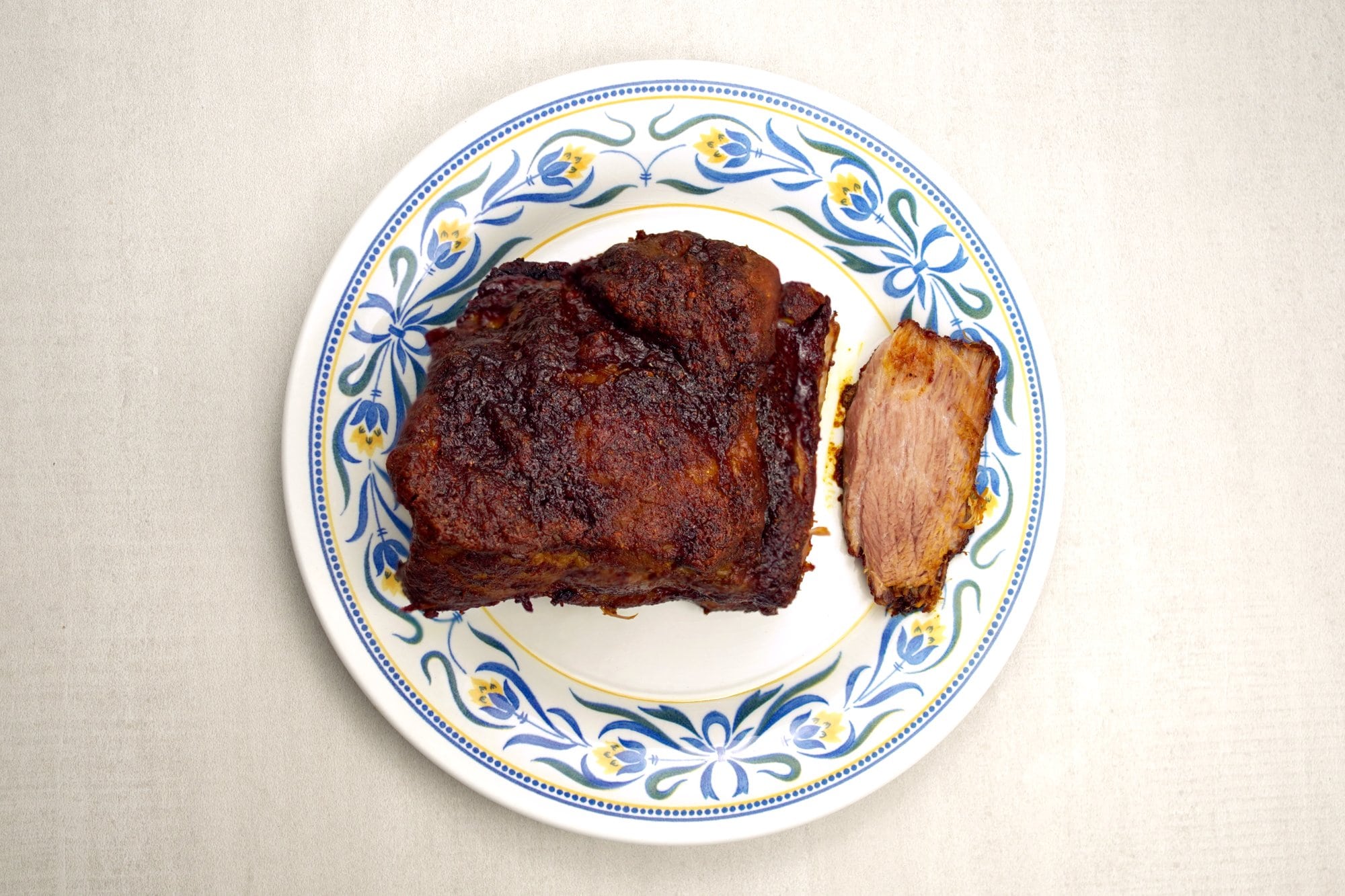
Deliciously tender and juicy spiced ham, boiled then roasted to perfection.
Ask for a sandwich in northern Peru and you won't get a grilled cheese or a BLT. What you'll get is a butifarra, freshly toasted ciabatta bread stuffed with sliced jamón del país, red onion, a mayo and mustard sauce, and some jalapeños or olives. This is the sandwich of choice at canteens and street stalls across the region, and jamón del país is the whole reason it works.
Jamón del país translates to “local ham” or “country ham.” It's a pork loin or leg that gets seared, slow-boiled with onion, bay leaves, and star anise, and then finished in the oven with a sauce made of garlic, achiote, ají panca, cumin, and vinegar. It sounds like a lot of steps but it isn't complicated. The method does most of the work.

Origins of Jamón del País
Jamón del país is one of Peru's Spanish-influenced dishes. Pigs were introduced to Peru by the conquistadors, and with them came European traditions of curing and cooking pork. Over time, Peruvian cooks, particularly in the north, made it their own by adding local ingredients: ají panca for heat and smokiness, achiote for color and flavor, and a spice blend of cumin, garlic, star anise, and turmeric that gives the finished ham its distinctive character.
A popular delicious fusion of Spanish tradition and Peruvian flavors, made into something entirely its own.
The result is less a cured ham in the European sense and more a slow-cooked, spiced roast, one that has become a staple of northern Peruvian street food. Outside Peru it's still relatively unknown, which makes it one of those dishes well worth trying at home.

How to Eat Jamón del País
The traditional way to eat it is in a butifarra sandwich. Take a fresh ciabatta or pan francés roll and toast it. Spread with a sauce made of mayonnaise, mustard, and a spoonful of ají panca. Add sliced ham, red onion, some jalapeños or olives, and you're done. Some people add tomato, lettuce, cheese, or whatever works for you.
It also works well sliced and served as a main course with rice and salad. And leftover slices fried up in a pan the next morning are not a bad idea either.

Substitutions and Variations
No ají panca?
The most common substitute is ancho paste or ancho powder, which is similar in its smoky, mild heat. Chipotle, habanero, smoked paprika, or chili powder can also work. Ají panca paste is available in Latin grocery stores and online if you want to track it down, it's worth it for the flavor.
Pork loin or pork leg?
Both work. Pork loin is leaner and slices neatly, which is ideal for sandwiches. Pork leg has more fat and tends to become even more tender after the long boil. Don't trim all the fat off either cut, it keeps the pork from drying out during cooking.
Can you use broth instead of water?
Yes, and it does add more flavor. Pork or chicken broth both work well. If you're keeping the dish gluten-free, just check the label on any store-bought broth.
Ingredients

Pork loin or pork leg is the main component and the leanest, most tender part of the pork. Achiote oil or paste (annatto) adds a nutty flavor and gives the ham its vibrant orangey color. Ají panca provides a bit of a spice kick with a smoky taste. Star anise and bay leaves go into the boiling water to add flavor and prevent the meat from smelling or tasting gamey. Garlic, cumin, black pepper, brown sugar, and turmeric make up the roasting sauce. Apple cider or white vinegar tenderizes the meat and helps the sauce absorb into it.
Quick Tips
Before seasoning, skim off some fat but not all of it. Keeping a bit of fat helps the pork stay moist during the long cooking time.
To check if the pork is fully cooked after boiling, pierce the thickest part with a knife or fork. The juices should run clear, not pink. If they're still pink, give it another 15–30 minutes and check again.
For the sauce to penetrate the meat, score shallow slits across the top and bottom of the pork once it has cooled from boiling. Then coat with the sauce before roasting.
Frequently Asked Questions
Is jamón del país gluten-free?
Yes, though if you are using store-bought chicken or pork broth you may want to check the ingredients. Vinegars are typically gluten-free unless it's malt vinegar. Achiote oil or paste and ají panca are also gluten-free, though some achiote pastes may contain cornmeal — worth checking the label.
How do you eat jamón del país?
You can eat it on its own, but it's most commonly served as a sandwich called butifarra. Toast a ciabatta roll, spread with a sauce made of mayonnaise, ají panca, and mustard, and add the sliced ham with red onions, jalapeños, or olives. Some also add tomato, salsa, cheese, or lettuce.
If you like this recipe, check out our Pollo a la Brasa (Peruvian Roast Chicken) — another dish that uses a similar boil-then-roast method. Or try Pan con Chicharrón, another classic Peruvian pork sandwich worth knowing about.
Jamón del País (Peruvian Country Ham)
Equipment
Ingredients
- 1.5 kg pork loin or pork leg, boneless
- 3–4 tablespoons rock salt
- 1 tablespoon olive oil or grapeseed oil
- Water or broth (pork or chicken) — enough to cover the pork
- 1–2 medium white onions
- 3 bay leaves
- 2 tablespoons star anise
- 7 cloves garlic
- 2 tablespoons achiote oil or paste (annatto oil or paste)
- 1 tablespoon ají panca
- 1 tablespoon cumin powder
- ½ tablespoon ground black pepper
- 3 tablespoons brown sugar
- 1 tablespoon turmeric
- ¼ cup apple cider vinegar or white vinegar
Instructions
- Pat the pork dry with a kitchen towel. Season all sides with 2 tablespoons of salt.
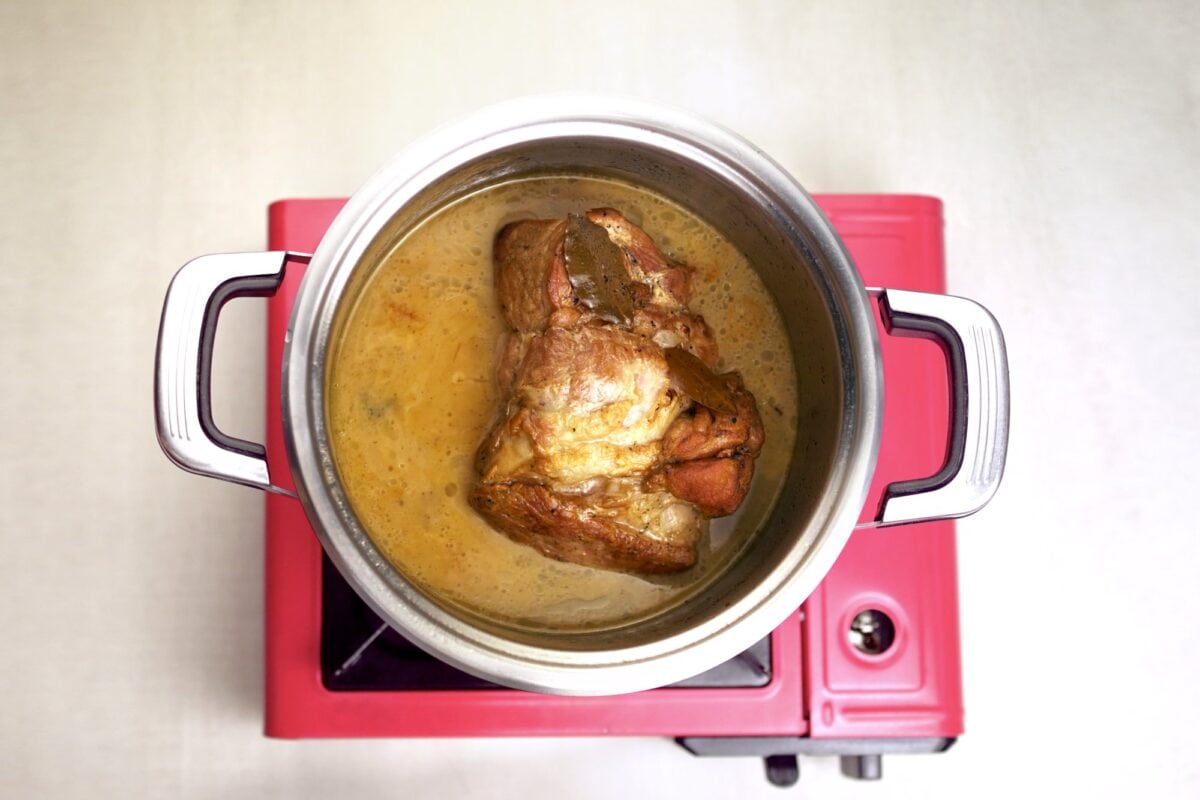
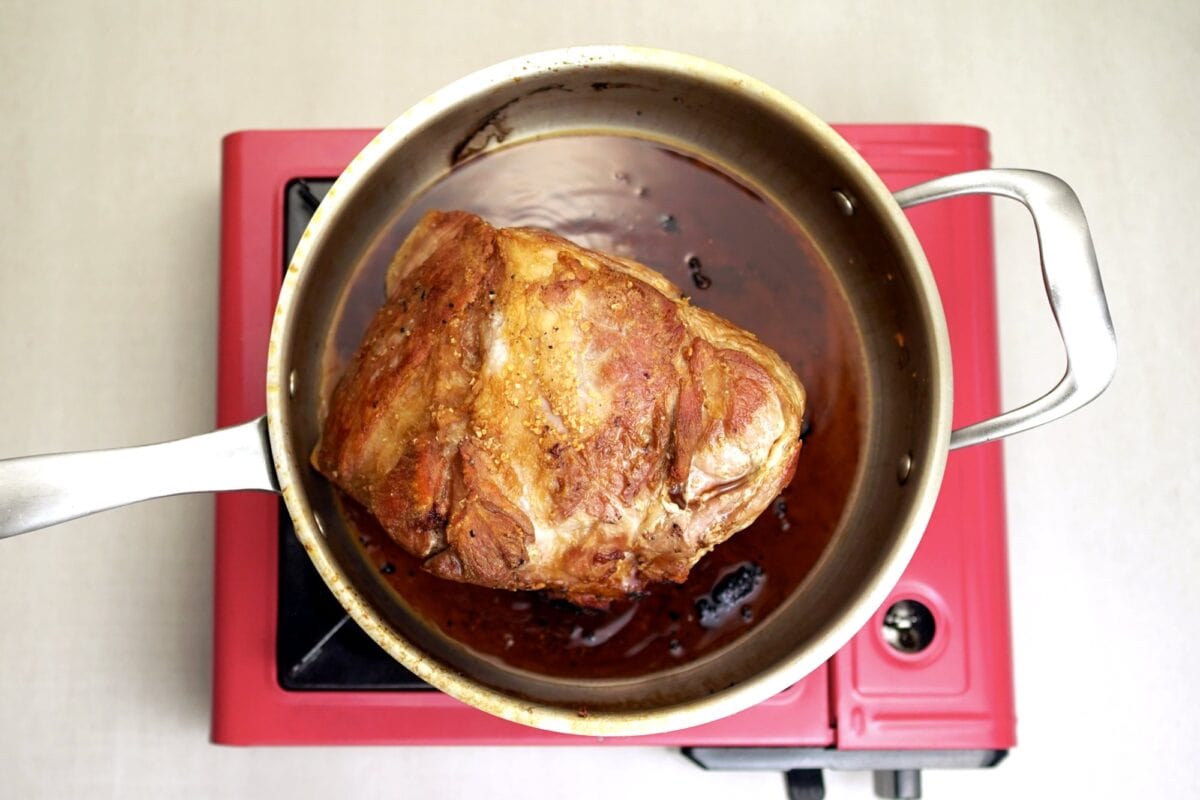
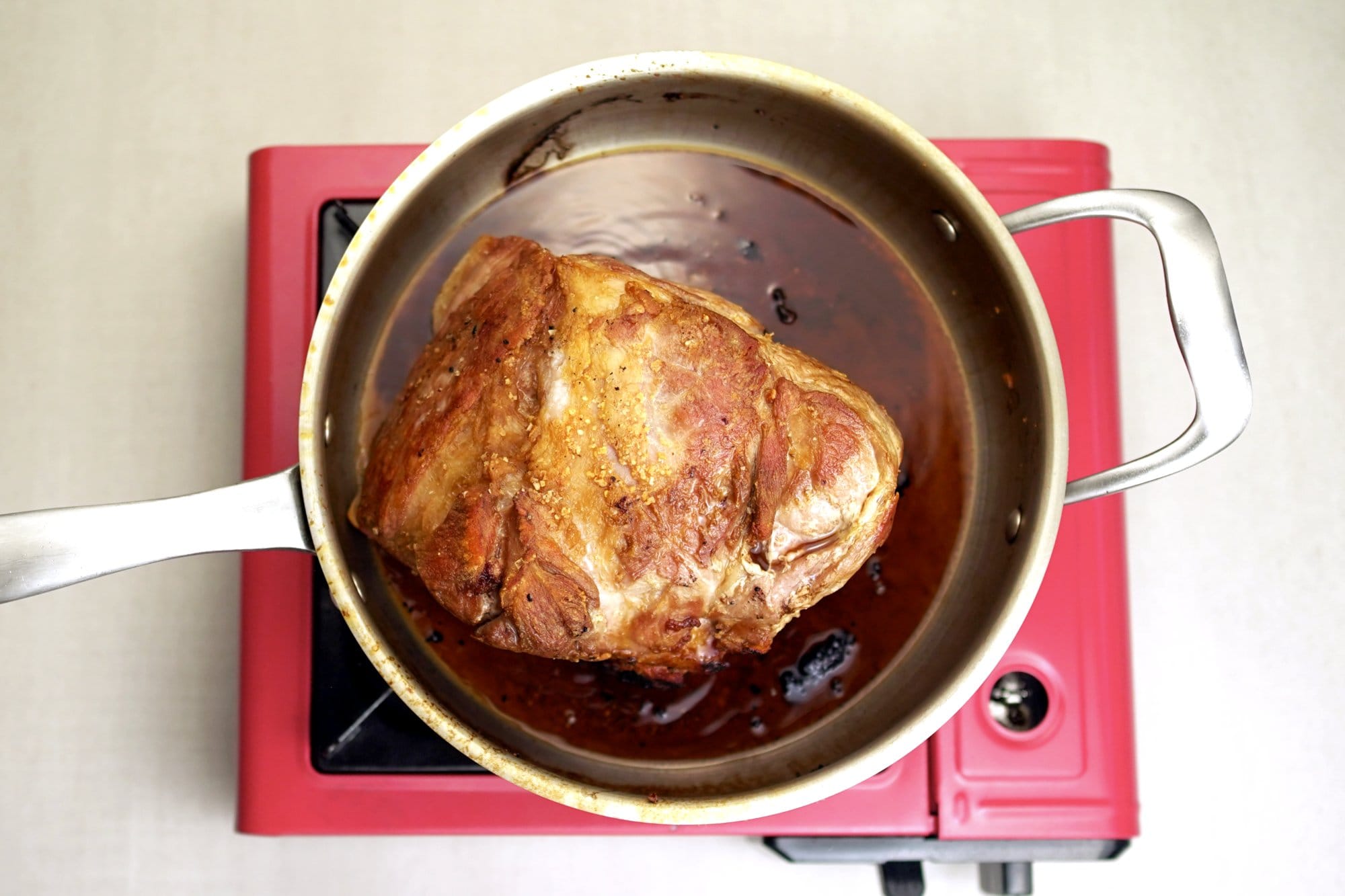
- Heat the olive oil in a frying pan over medium-high heat. Place the pork in and cook until all sides are browned.
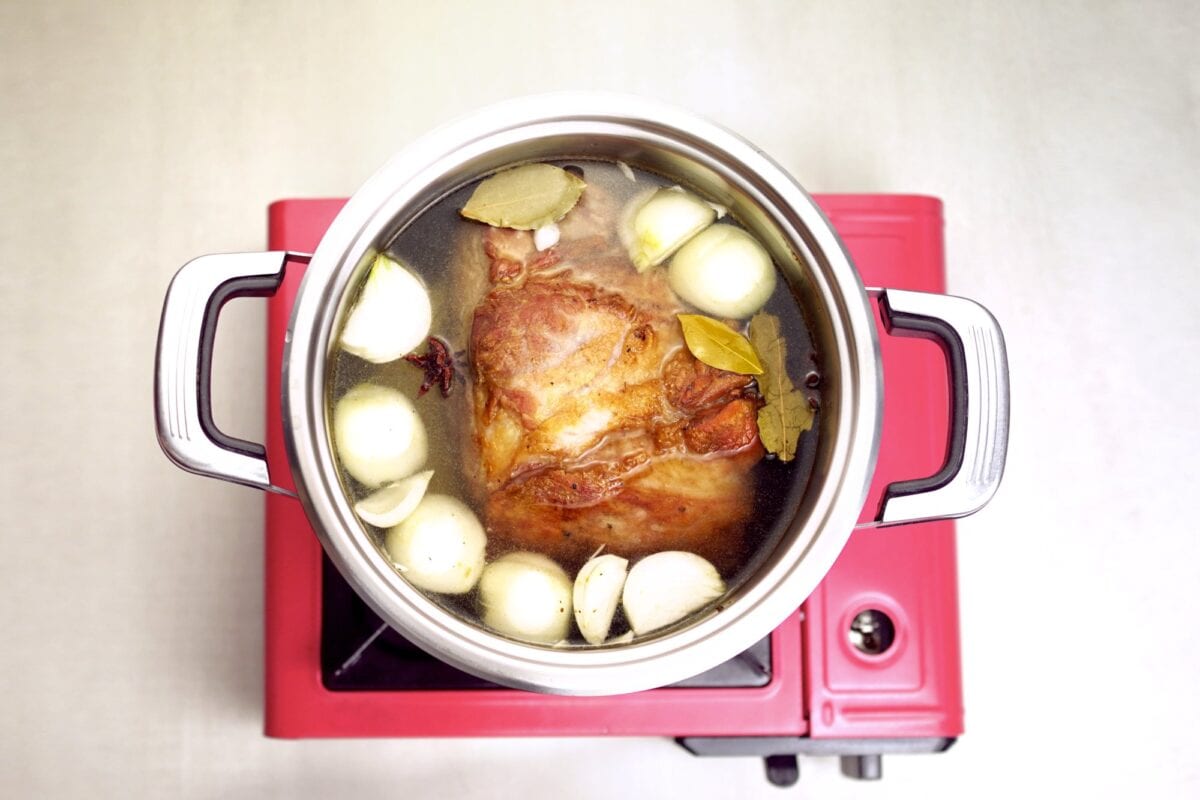
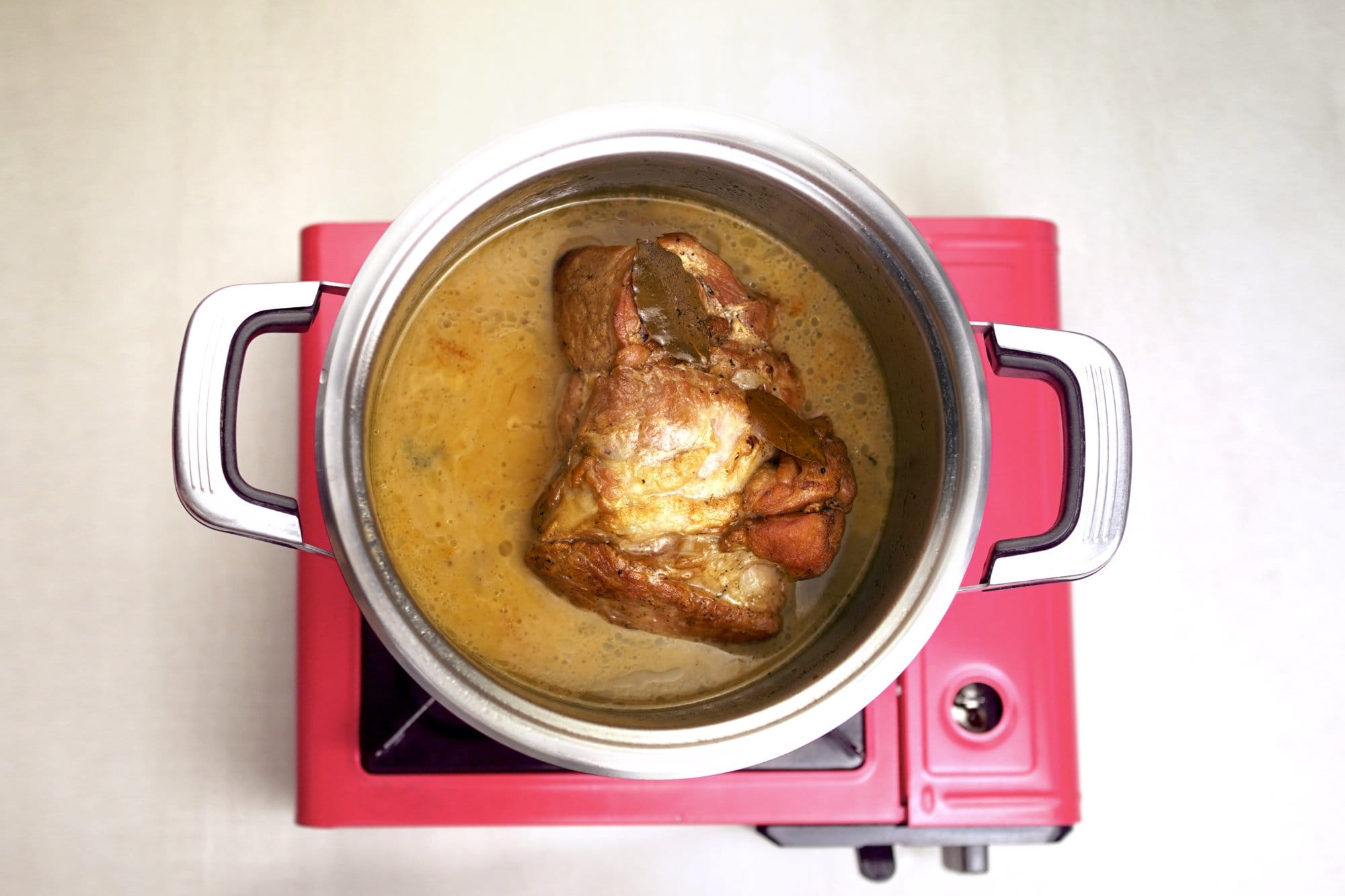
- Place the pork in a large pot. Fill with enough water or broth to cover it completely. Add the onions, bay leaves, and star anise. Bring to a boil.
- Simmer for 1 hour 30 minutes to 2 hours, or until the juices run clear when you pierce the middle of the pork with a knife or fork.
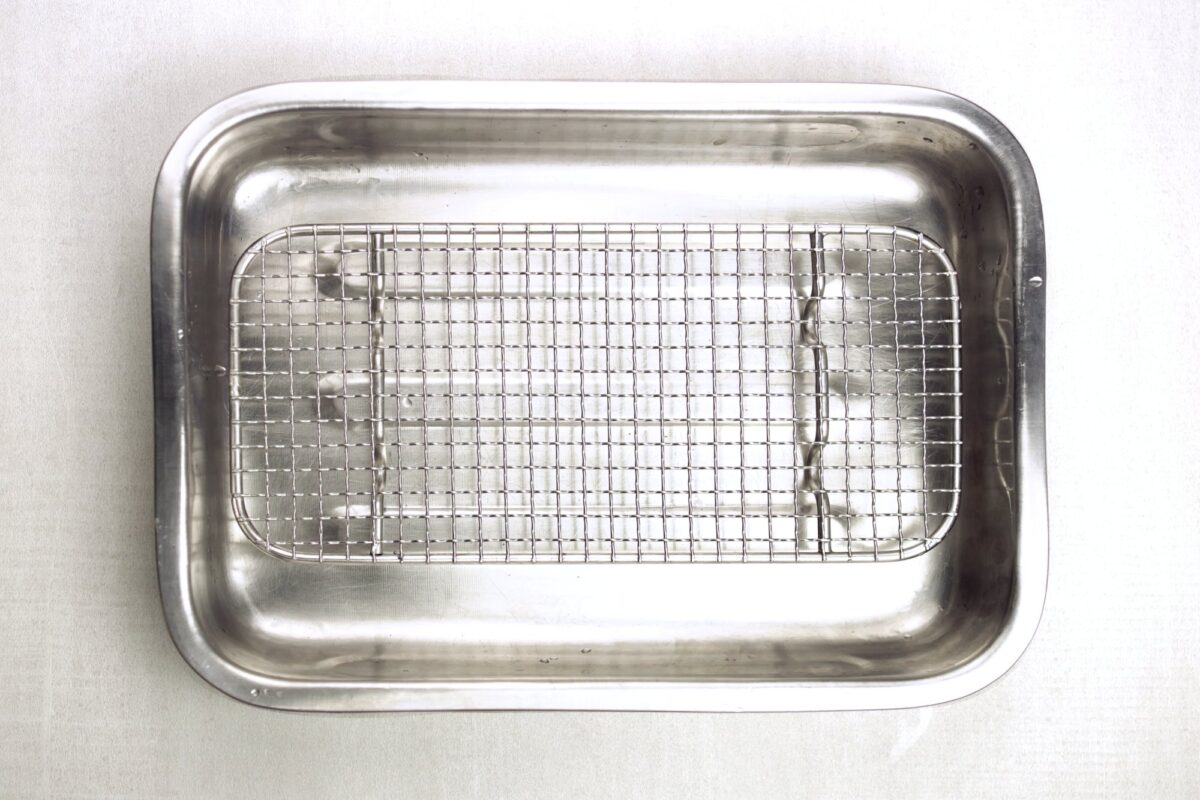
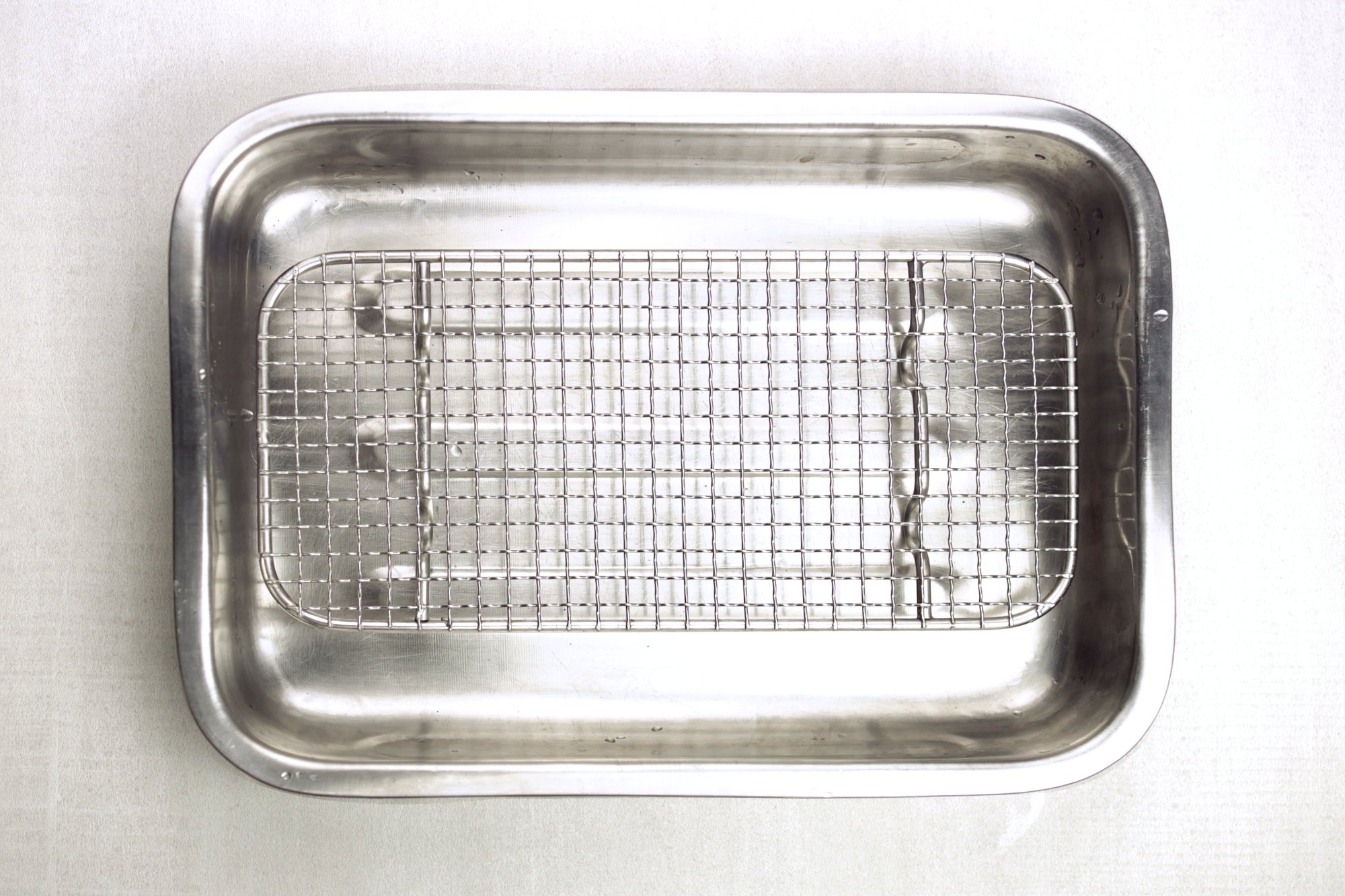
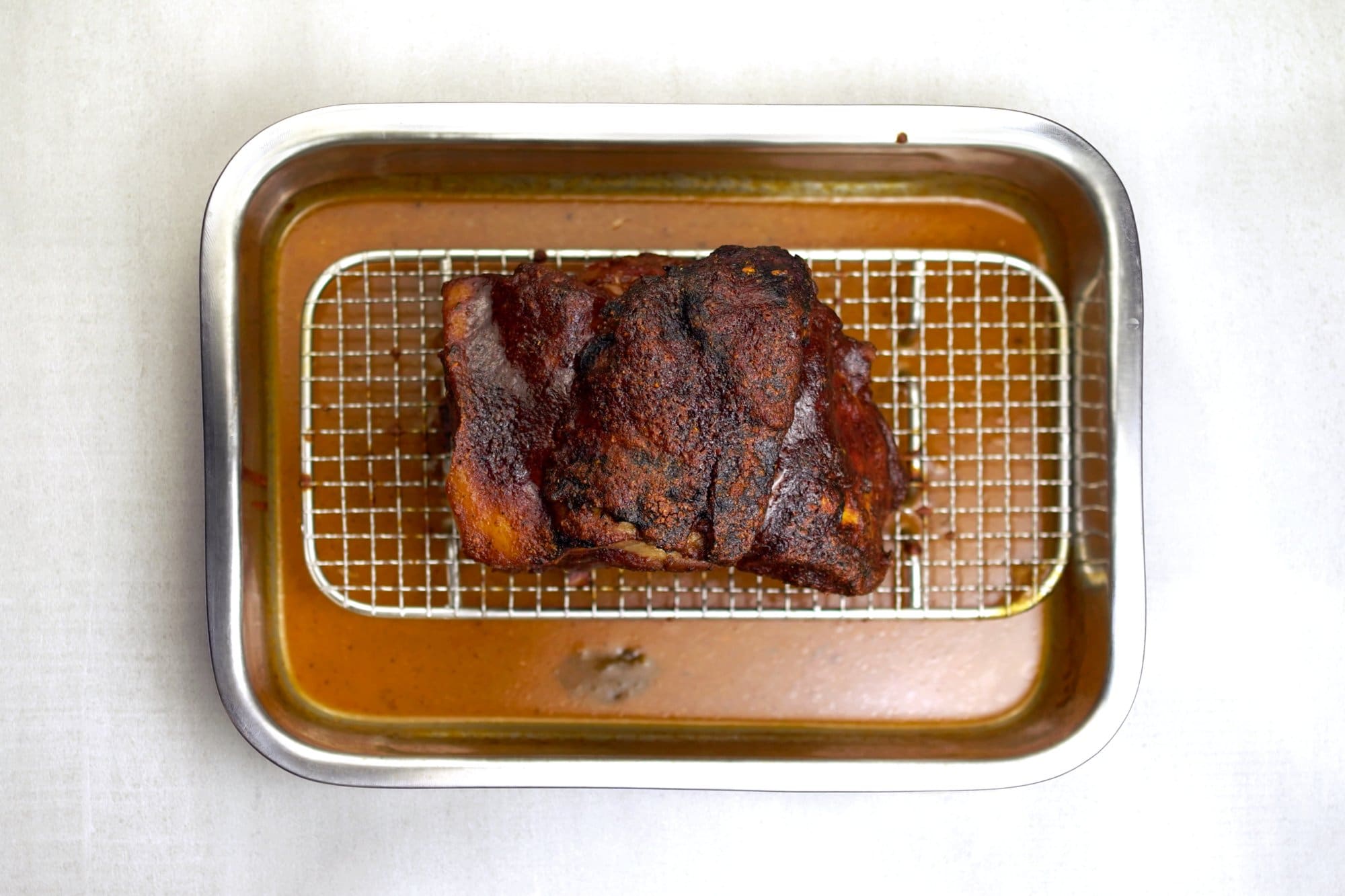
- Remove the pork and place on a roasting rack inside a deep baking tray. Pour about 2 cups of the boiling liquid into the tray. Let the pork rest while the oven preheats to 350°F / 176°C.
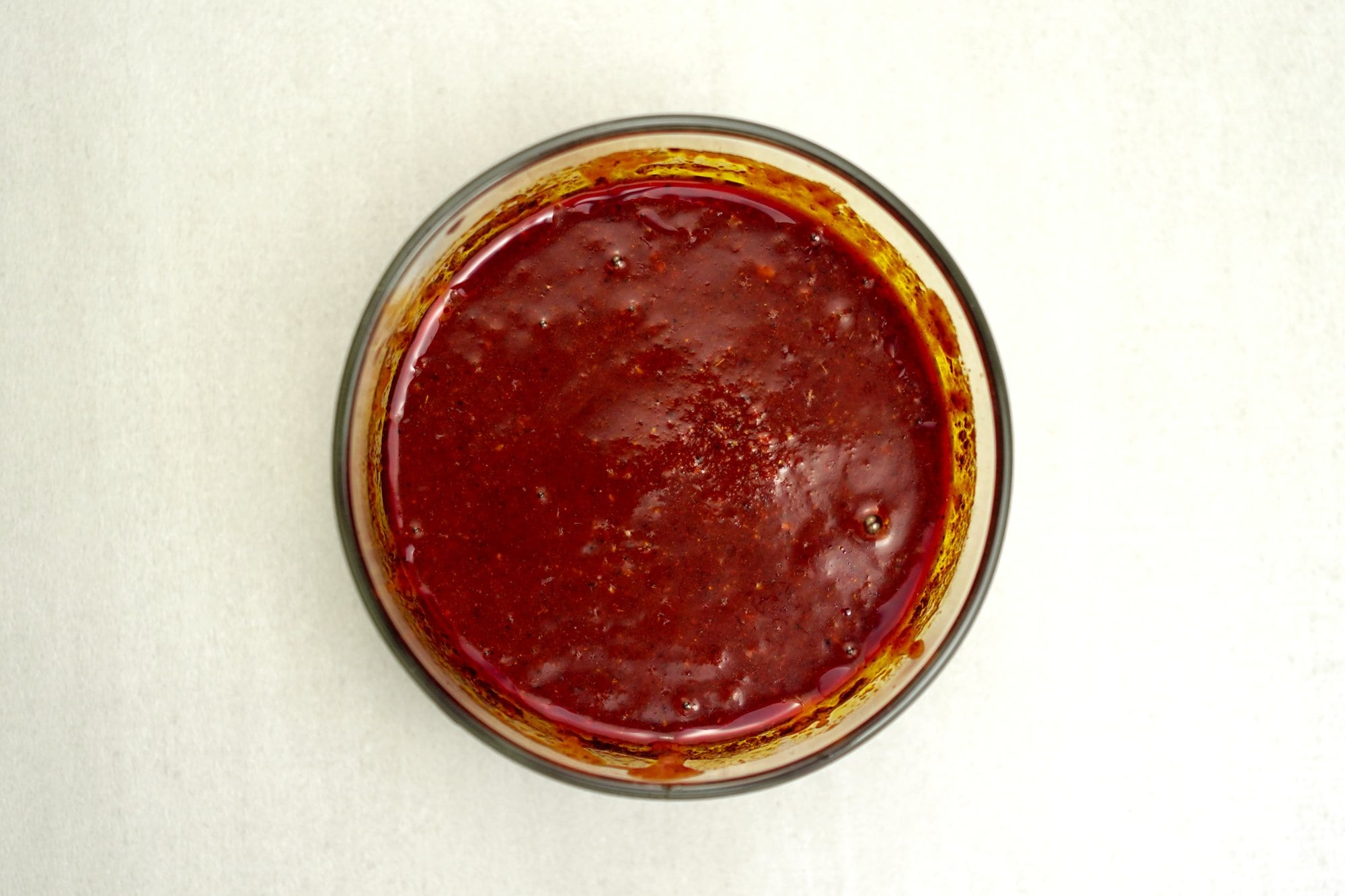
- To make the sauce, blend together: 1–2 tablespoons rock salt, the garlic, achiote oil or paste, ají panca, cumin powder, black pepper, brown sugar, turmeric, and the apple cider vinegar. Blend until smooth.
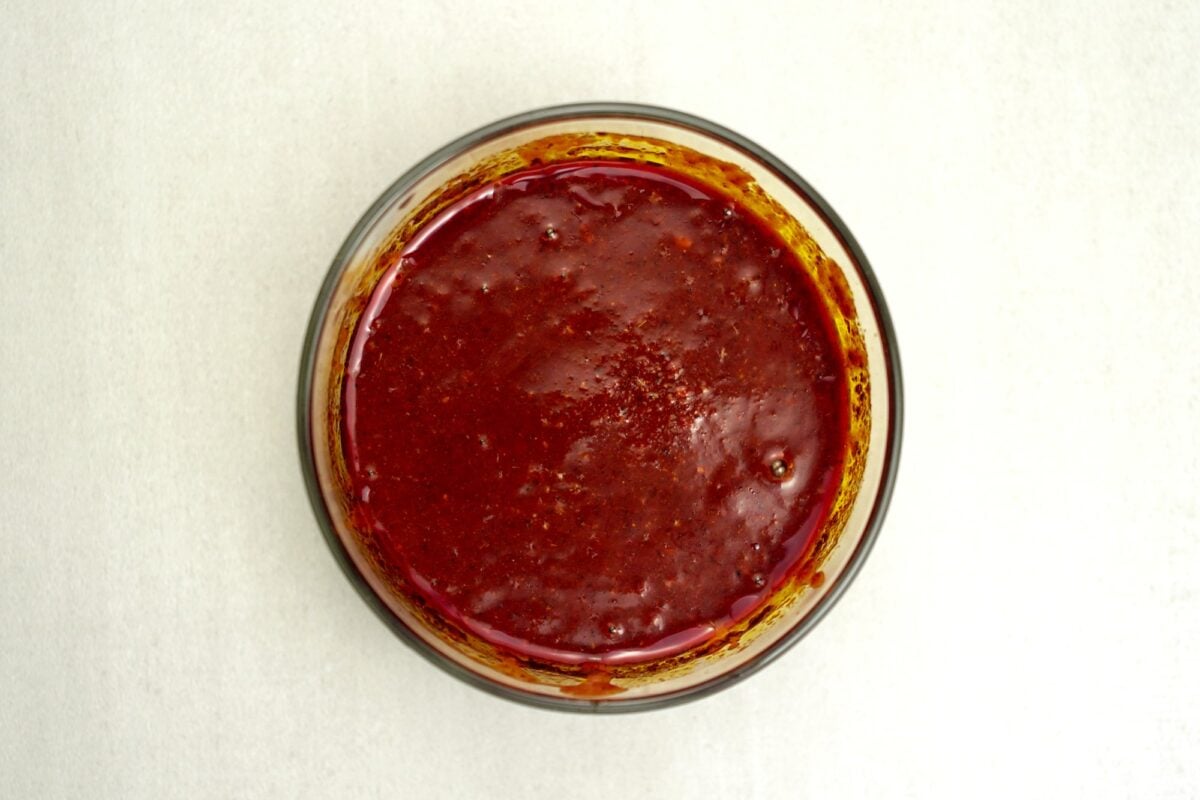
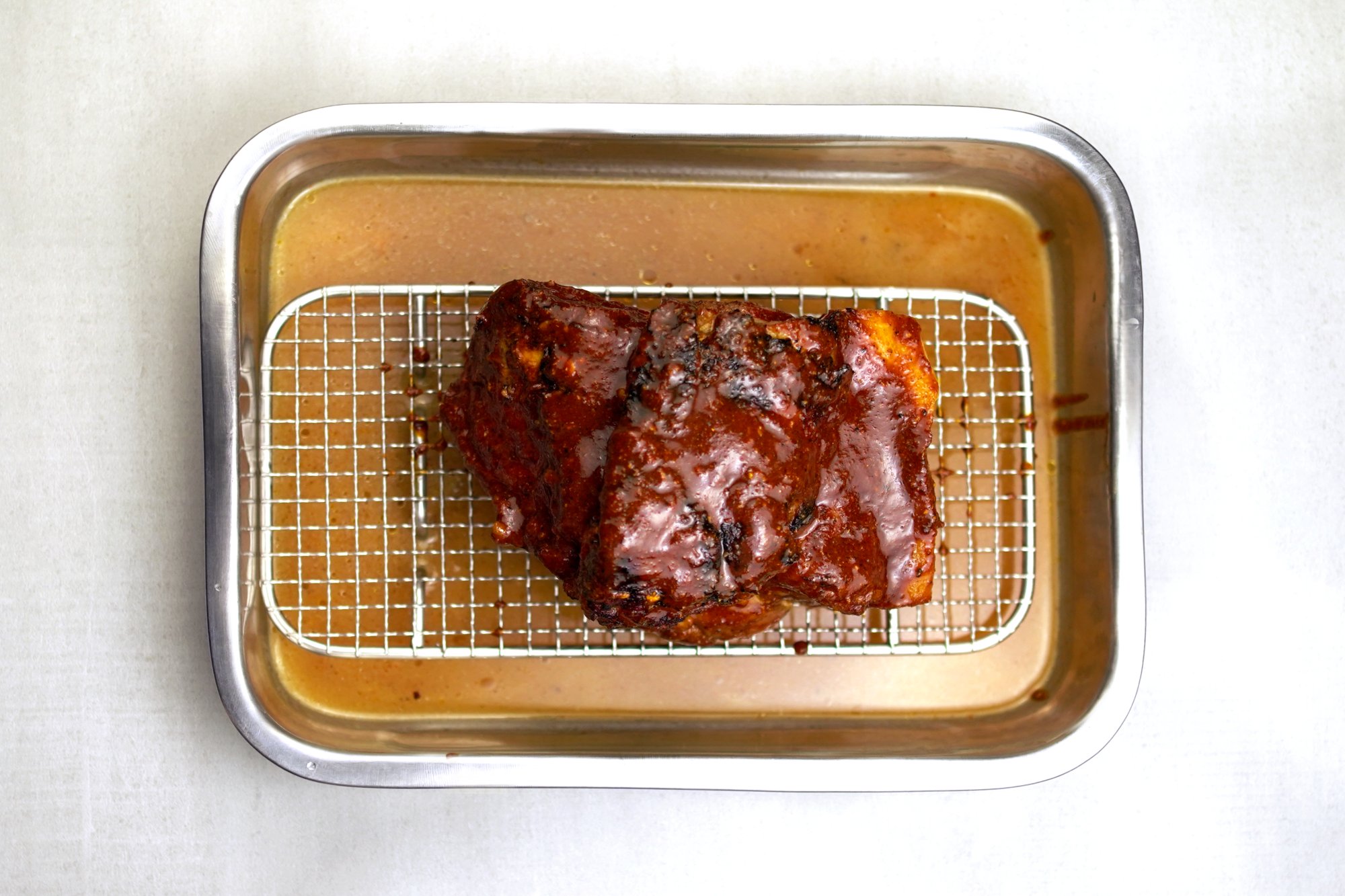
- Score shallow slits across the top and bottom of the pork. Coat all over with half the sauce. Roast for 30–40 minutes.

- At the 15–20 minute mark, flip the pork and coat with the remaining sauce. Continue roasting until the sauce has dried and the outside has caramelized.

- Once done, take it out of the oven and let it cool to room temperature.
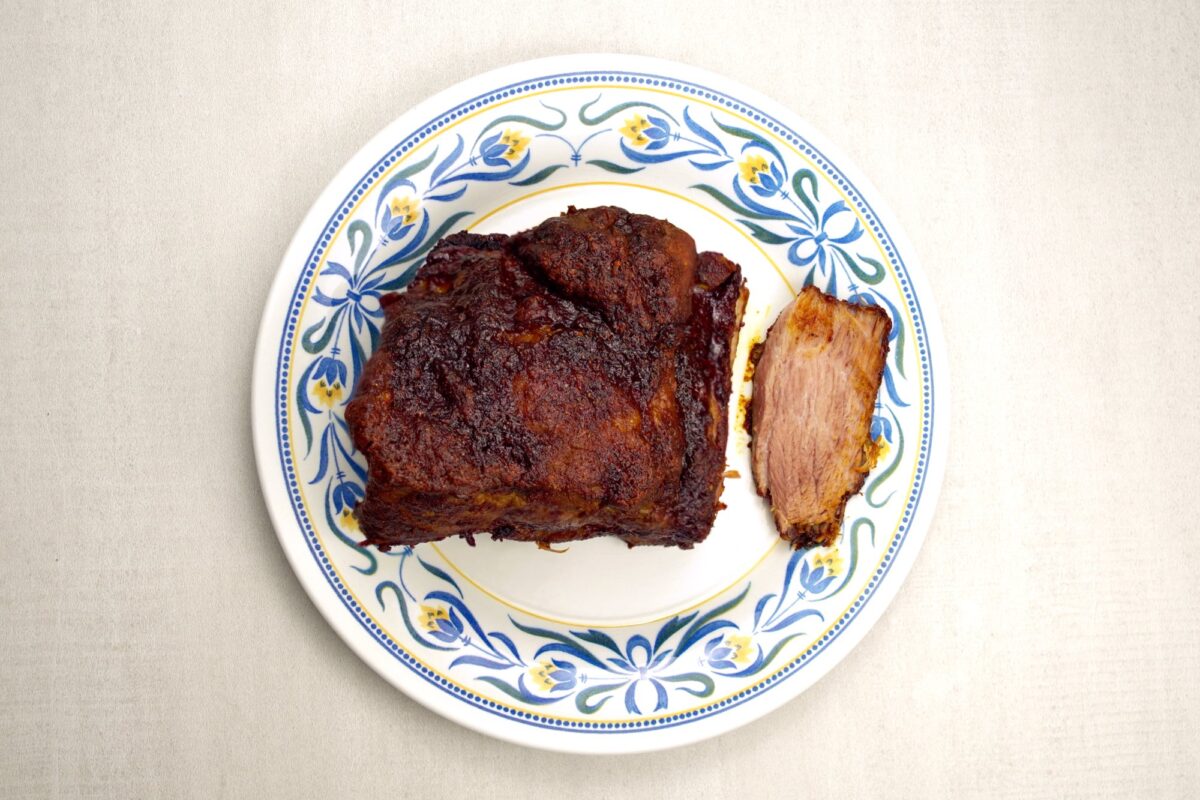
- Slice and serve.

Notes
Nutrition

Peruvian foodie. I've been writing about the food of Peru for over 10 years. Read more about the Eat Peru team here
Leave a Reply